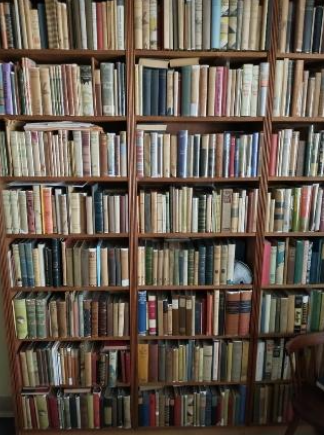
2025-26 Season Meetings
Tuesday, September 9, 2025: Pre-Season Bonus Event: “The Treasurers of the American Philosophical Society”

The Library & Museum of the American Philosophical Society will offer a unique opportunity to meet its curators and examine manuscripts and printed material from each of its collecting areas. David Gary, Associate Director of Collections, will present on the APS's early American collections, followed by Adrianna Link, the inaugural Curator of the History of Science, and Brian Carpenter, the Curator of Indigenous Materials. The event will be hosted by the Director of the Library & Museum, Michelle McDonald.
The American Philosophical Society, founded by Benjamin Franklin in 1743, houses 70% of the known Franklin papers; the original journals of the Lewis & Clark expedition; a Dunlap printing of the Declaration of Independence from July 4-5, 1776; an annotated copy of the printing of the U.S. Constitution given to delegates on September 17, 1787, with Franklin's marginalia; Jefferson's instructions and subscription list for Andre Michaux's 1793 western expedition, the only known document containing the signatures of the first four presidents of the United States; and many more of the most significant archival materials documenting American history. For our September special event, Philobiblon Club members will be given the rare chance to view selected highlights of one of Philadelphia's most distinguished institutions.

Tuesday, October 14, 2025: Clarence Wolf, “More than Fifty Years a Bookseller: Further Tales of the Book Trade in Philadelphia and Beyond”
In 1968, Clarence Wolf joined his parents in taking over MacManus Books, a longstanding rare book dealership, then located in a charming building on Irving Street, behind the Library Company. It is the only job he has ever had. His book, Fifty Years a Bookseller: or, The Wolf at Your Door, privately printed in 2022, describes a business world based on a mixture of expertise and trust, where relationships between individuals, good and bad, are key. Mr. Wolf uses the word “character” often in the book to describe both his heroes and villains. Now Mr. Wolf has written a second edition of his book with seven new chapters and additional tales of the fascinating people he met and the remarkable books he was able to acquire and sell through his shop. In his talk to Philobiblon, Mr. Wolf will share stories from his decades in the book trade.
Clarence Wolf is the proprietor of George S. MacManus Company, 12 Water Street, Bryn Mawr, macmanus-rarebooks.com. He has been a member of the Philobiblon Club for decades.
Tuesday, November 18, 2025: Christine Nelson, “Books, Luv, and Envy: The Forty-Year Relationship of Belle da Costa Greene and A. S. W. Rosenbach”

Almost exact contemporaries, Belle da Costa Greene (1879–1950) and A. S. W. Rosenbach (1876–1952) were luminaries of the twentieth-century rare book world. Both were elite collection-builders, savvy professional operators, ambitious self-mythmakers, indefatigable bons vivants, and brilliant bibliophiles. By the late 1920s, Greene was director of the Pierpont Morgan Library in New York, overseeing what was arguably the nation’s finest institutional collection of rare printed books and bindings, medieval manuscripts, and literary and historical manuscripts. Rosenbach was the country’s leading antiquarian bookseller, his firm headquartered in Philadelphia with a New York showroom located not far from the Morgan on East 51st Street. While both were shrewd enough to capitalize upon each other’s stature and connections, they were also fortunate to find, and enjoy, a friendship that matured during the twilight of their lives.
This talk is a preview of new research conducted for Christine’s essay “‘A Race Apart: The Bibliophilic Networks of Belle da Costa Greene and A. S. W. Rosenbach,” to be published in a forthcoming book, edited by Laura Cleaver and Natalia Fantetti, on Belle Greene and the antiquarian book trade.
Christine Nelson is the former Drue Heinz Curator of Literary and Historical Manuscripts at the Morgan Library & Museum and contributor to J. Pierpont Morgan: Building the Bookman’s Paradise (Scala, 2023). She is the 2025–26 Faith Andrews Fellow at Winterthur.
Tuesday, January 13, 2026: Guest Panel 2026: Representatives of Philadelphia Libraries and Archives Discuss Planned Observances of the Nation’s 250th Birthday
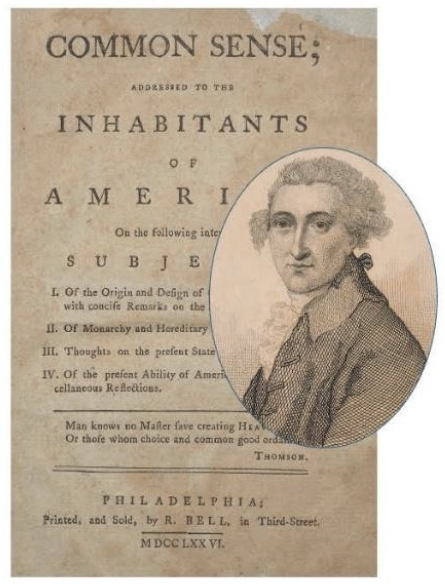
The Semiquincentennial (250th anniversary) of the Declaration of Independence, also being referred to across the country as America 250, provides the Philadelphia community with an ideal opportunity to re-examine some of the founding documents of our country from both historical and contemporary perspectives. Hear about some of what's happening in 2026 at institutions across the region, including the American Philosophical Society, the Library Company of Philadelphia, the Science History Institute, the Free Library of Philadelphia, the University of Pennsylvania, and more.
The program will be moderated by Lynne Farrington, Director of Programs and Senior Curator at the Kislak Center at Penn.
Tuesday, February 10, 2026: The Denig Manuscript Project at Winterthur
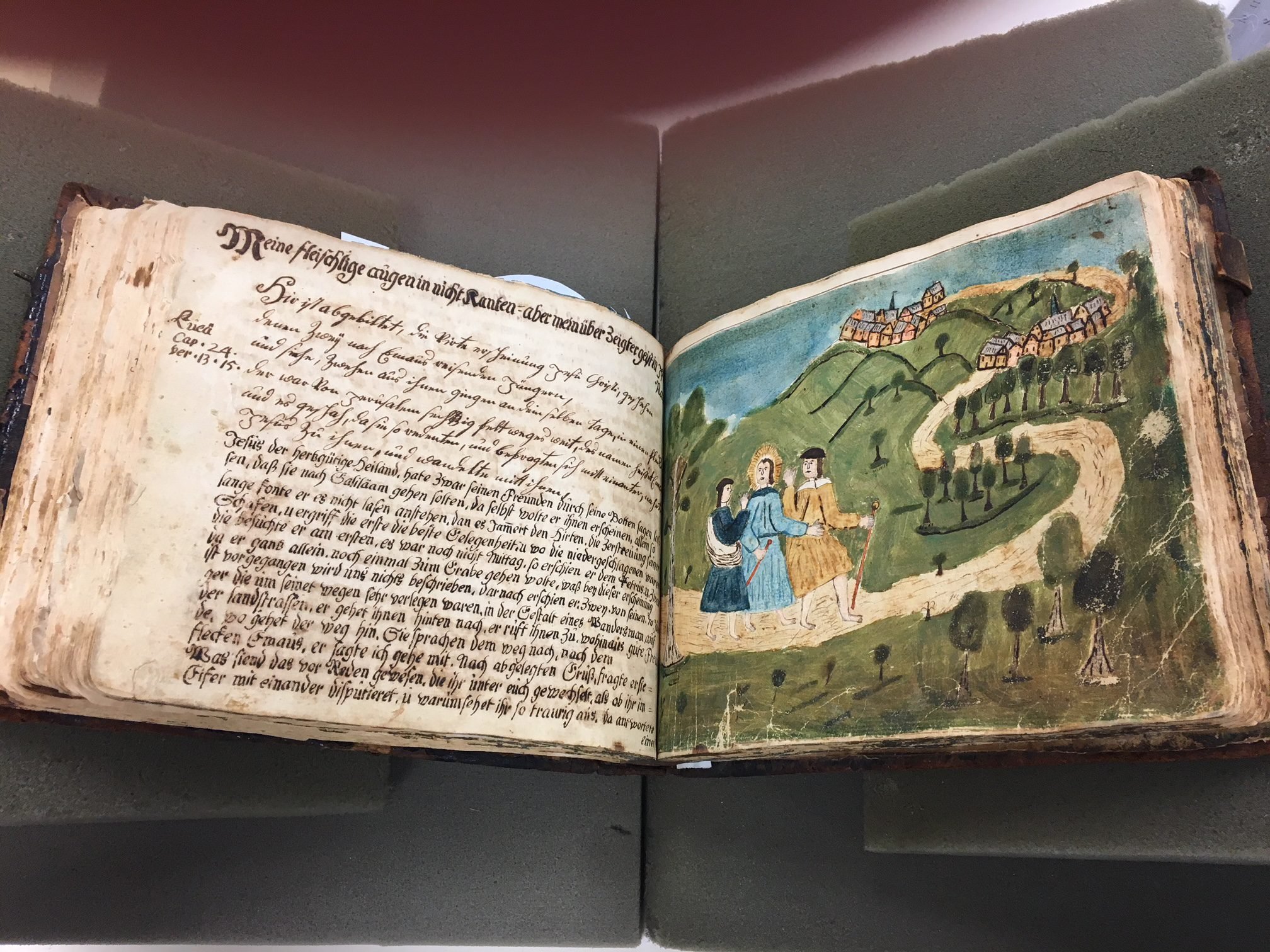
Ludwig Denig (1755-1830) was a shoemaker and apothecary living in colonial and revolutionary Pennsylvania. In 1784, he drew on the devotional and biblical spirituality of regional Lutheran and Dutch Reformed churches to create a leather-bound manuscript that draws on several theological and artistic traditions. The volume provides a unique document of one man’s religious and cultural life, illustrated with images informed by the world around him, creating a work of art that is unique.
The Denig Manuscript Project at Winterthur brings this eighteenth-century, Pennsylvania-made manuscript and its watercolors to life through a collaborative multimedia digital project. High-resolution digital images, updated translations, forensic analysis, sound recordings, and contextual scholarship provide enhanced access to this extraordinary document of religious life in early America.
Catharine Dann Roeber is Associate Professor of Decorative Arts and Material Culture at Winterthur, where she heads the Denig Project. She is the executive editor of Winterthur Portfolio: A Journal of American Material Culture and recently curated Transformations: Contemporary Art at Winterthur and co-edited The Cambridge Handbook of Material Culture.
Tuesday, March 10, 2026: The Art of Ursula Sternberg-Hertz
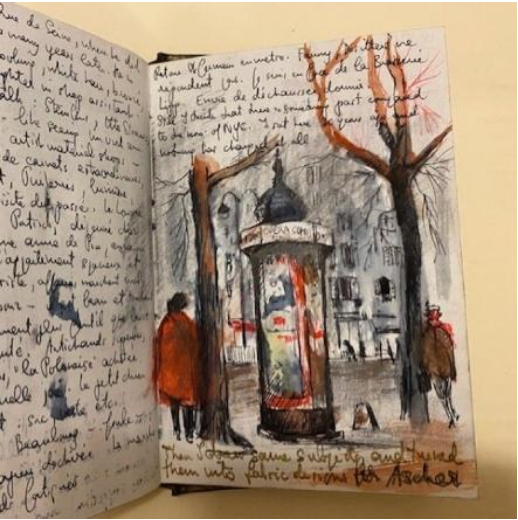
Ursula Sternberg-Hertz (1925-2000) was an artist who lived in Germany, the Netherlands, Belgium, England, and Canada before immigrating to Philadelphia in 1971 with her husband, conductor Jonathan Sternberg. In her papers at the Kislak Center, Sternberg-Hertz’s experiences, feelings, and stories burst from the pages as a visual extravaganza in vibrant colors. In addition to her words, her paintings, drawings, sketches, and visual diaries join in the documentation of a vivid life, filled with family, war, survival, love, marriage, motherhood, friendship, and so much art. Holly Mengel will introduce Sternberg-Hertz’s world as seen through her eyes and her experience of her childhood in Germany, fleeing to Holland and Belgium to escape the Nazis, and her adulthood as she moved from England to settle in Chestnut Hill, all the while creating art and communities of artists.
Holly Mengel is Head of Archives and Manuscripts Processing in the Kislak Center and has worked at Kislak since 2013. She earned a BA in history from Dickinson College and an MLIS with a concentration in Archives from the University of Pittsburgh. She has been processing collections for over twenty years, in Pittsburgh, Harrisburg, Princeton, and Philadelphia.
Tuesday, April 14, 2026: Bill Rhoda, “Keys Through Time: The Origins and Revival of the Typewriter”
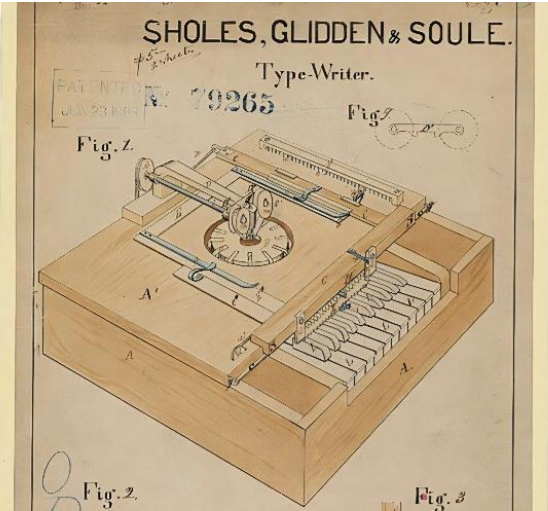
After over fifty failed attempts to patent a machine that would mechanically lay ink on a page, the Type-Writer emerged in 1868. Successfully pioneered by Christopher Lathem Sholes, an inventor and Western Union patent clerk from Milwaukee, the typewriter shaped the industrial revolution and changed the world. It filled the need to relieve the bottleneck of information and communication in the late 19th century. Now, in the 21st century, the typewriter invites people to slow down and invest themselves in something more thoughtful and patient in the face of our technological age where so many people experience digital burnout. The typewriter’s story spans 150 years and starts with the invention of this simple machine that has stood the test of time.
Bill Rhoda is co-owner and lead mechanic of Philly Typewriter, said to be the largest typewriter company in existence today. Philly Typewriter’s large shop on Passyunk Avenue in South Philadelphia houses thousands of antique typewriters and serves clients throughout the country. An orchestral saxophonist, Bill taught music at Lincoln College in Illinois before returning to Philadelphia, where he met his business partner and adopted dad, Bryan Kravitz. Bill has been working on manual typewriters for eight years. As founder of the Philadelphia Typewriter Trade School, he enjoys teaching a new generation how to repair, preserve and keep these machines, and their stories, alive.
Tuesday, May 12, 2026: Panel Discussion: “And in the End.… What am I to Do with my Book and Paper Collection(s): Gift, Auction or Sale?”
In this meeting, Philo members will have an opportunity to consider the question “what am I to do with my books?” This question signals an important stage in the life of a book collector: the transition to considering the disposition of one’s legacy book collection. Whether the goal is to liquidate for maximum profit, preserve the collection for history, optimize tax benefits, or donate to an appreciative institution, each path requires a different strategy. To enlighten and inform Club members, a panel of four specialists has been assembled to address the question from four perspectives: donation, gift agreements; auction, or sale.
Panelists:
Lynne Farrington, Director of Programs/Senior Curator, Special Collections, Kislak Center, University of Pennsylvania
Robert Vossburgh, Executive Director of Gift Planning, Penn Medicine
Christina Geiger, Head of Department, Books and Manuscripts at Christie's, New York
Heather O’Donnell, Proprietor, Honey & Wax Books, Philadelphia
David McKnight, retired Director of Manuscripts/Curator, Special Collections, Kislak Center, University of Pennsylvania, Moderator